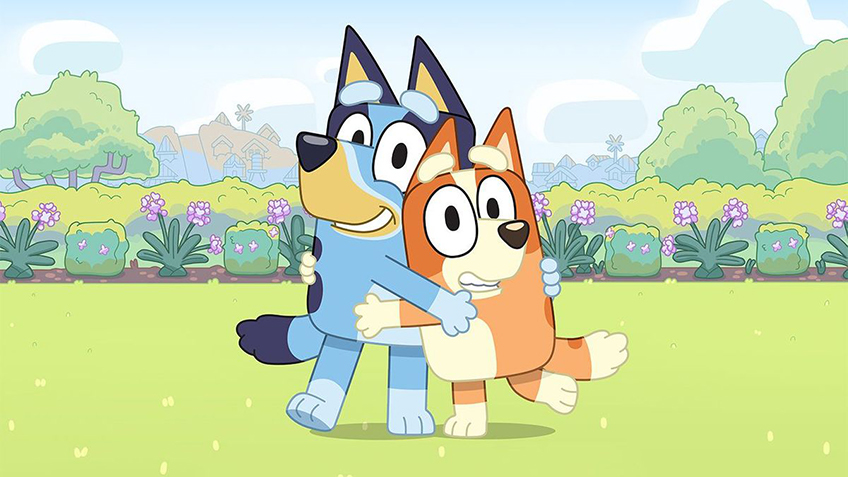
Then it would have had access to a film industry tax offset for 30 per cent against its own investment in the series, and contributions from Screen Australia and Screen Queensland.
The show turned out to be brilliant, and BBC Studios secured a spectacular deal with Disney during a unique window of opportunity when Disney was seeking non-Disney content for its global channels.
Royalties and sales proceeds do flow back to Australia, via the show’s creators at Ludo Studio in Brisbane.
There’s no sure-fire way to pick hits. Who knows whether the show would have done as well if the original deals had been different?
Or if it had come along five years later, when the individual Disney channels started shutting down to concentrate all the content on their streaming platform? Or if it came along now, when the global preference is to commission reboots of old shows?
Most children’s shows aren’t financial juggernauts, and broadcasters and streaming platforms don’t want to spend as much on content for the children’s audience as they will for adults.
The ABC’s licence fees for children’s content are still generally half those for adult content, even though children’s shows are among the most popular on iview. That’s consistent with the practice of every other broadcaster in the world, and no one comments until one unicorn (or in this case, blue dog) goes off.
I’m concerned that the narrative now is that the ABC should be speculating on which shows will generate a financial return for it.
The suggestion last week was that a good children’s show could somehow be paying for all the Australian content on the ABC.
We wouldn’t accept that logic for adult audiences. We expect an array of content on our public broadcaster: news, documentaries, drama and entertainment. Lots of content for different purposes and different audiences, reflecting the breadth of our nation back to us.
Children and their families deserve the same: the full public broadcaster experience, with an array of content from producers across the country.
When children connect with characters and stories and see themselves reflected, they can imagine all the possibilities for someone who looks and sounds like them. When they relate to a character’s struggle, they know they are not alone. Otherwise, it’s an opportunity to try on someone else’s shoes and consider what it’s like to be them.
Australian children’s television is building empathy, kindness, social cohesion and shared values. It’s more important now than ever, but in the current fragmented media environment, it is more vulnerable than ever.
Many Australians have grown up with Australian children’s content. Shows such as Round The Twist, Spellbinder, Blinky Bill, Mortified, Dance Academy, Little Lunch and many more have embedded themselves in the hearts and minds of the generations that watched them, even if they didn’t generate billions or even millions.
Last week, we received an email from a family watching the new ABC children’s drama Caper Crew. They were loving watching the show together, and delighted that the word “yoinked” was now in the family lexicon.
The story that the ABC “fluffed the deal” covers up the truth that broadcasters never want to pay what it costs to make children’s television.
It is never valued at its true worth. We spend more money attracting high-budget overseas productions to Australia than we spend on children’s content. We spend more money on providing a post-production tax offset for reality TV series than we do on children’s content.
Imagine if we recalibrated all the funding levers we have for supporting Australian screen content and put stories for Australian children first?
What if we also required the YouTube algorithm to prioritise Australian children’s content in its feed? And asked the smart TV manufacturers to promote Australian children’s shows on the interface when we turn on the TV? And the streaming platforms and catch-up services to prioritise Australian children’s content on their platforms?
In short, what if we asked what we can do to support all Australian children’s TV to succeed?